DocuMeow
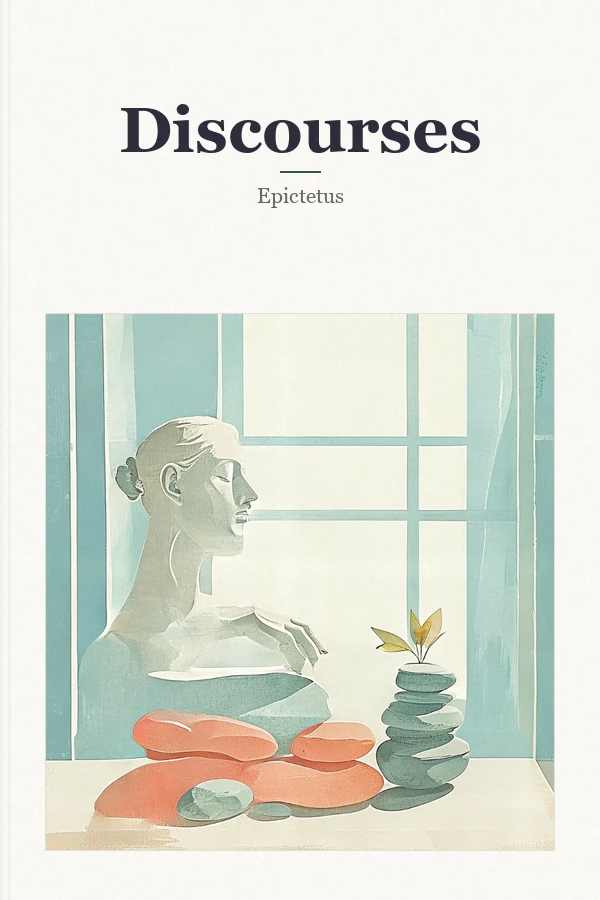
Discourses cover Discourses

Discourses

Epictetus

CC0-1.0 EnglishPhilosophy160,469 words17h 15m listenUnabridged epic

<p>Raised a slave in Nero’s court, <a href="https://standardebooks.org/ebooks/epictetus">Epictetus</a> would become one of the most influential philosophers in the Stoic tradition. While exiled in Greece by an emperor who considered philosophers a threat, Epictetus founded a school of philosophy at Nicopolis. His student Arrian of Nicomedia took careful notes of his sometimes cantankerous lectures, the surviving examples of which are now known as the <i>Discourses of Epictetus</i>.</p> <p>In these discourses, Epictetus explains how to gain peace-of-mind by only willing that which is within the domain of your will. There is no point in getting upset about things that are outside of your control; that only leads to distress. Instead, let such things be however they are, and focus your effort on the things that are in your control: your own attitudes and priorities. This way, you can never be thrown off balance, and tranquility is yours for the taking.</p> <p>The lessons in the <i>Discourses of Epictetus</i>, along with his <i><a href="https://standardebooks.org/ebooks/epictetus/short-works/george-long">Enchiridion</a></i>, have continued to attract new adherents to Stoic philosophy d

Ethics, AncientConduct of Life--Early works to 1800

Chapter 1

Of the Things Which Are in Our Power, and Not in Our Power

Of all the faculties (except that which I shall soon mention), you will find not one which is capable of contemplating itself, and, consequently, not capable either of approving or disapproving. 2 How far does the grammatic art possess the contemplating power? As far as forming a judgment about what is written and spoken. And how far music? As far as judging about melody. Does either of them then contemplate itself? By no means. But when you must write something to your friend, grammar will tell you what words you should write; but whether you should write or not, grammar will not tell you. And so it is with music as to musical sounds; but whether you should sing at the present time and play on the lute, or do neither, music will not tell you. What faculty then will tell you? That which contemplates both itself and all other things. And what is this faculty? The rational faculty; 3 for this is the only faculty that we have received which examines itself, what it is, and what power it has, and what is the value of this gift, and examines all other faculties: for what else is there which tells us that golden things are beautiful, for they do not say so themselves? Evidently it is the faculty which is capable of judging of appearances. 4 What else judges of music, grammar, and the other faculties, proves their uses, and points out the occasions for using them? Nothing else.

Edition & License

License
CC0-1.0
Source
Standard Ebooks
First published
1879
Author death year
1879
Catalog ID
se:epictetus_discourses_george-long

More in English

Browse all →