
DocuMeow
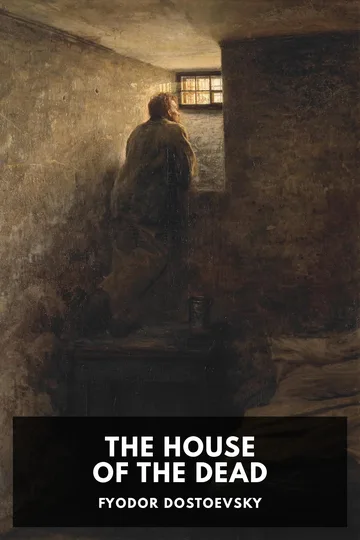
The House of the Dead cover The House of the Dead

The House of the Dead

Fyodor Dostoevsky

CC0-1.0 EnglishClassics127,567 words13h 43m listenLong

<p>In 1849, <a href="https://standardebooks.org/ebooks/fyodor-dostoevsky">Fyodor Dostoevsky</a> was sent to a Siberian prison camp for four years due to his involvement in an organization that had been banned by the Tsar. While there, he experienced a personal transformation, and after another six years of exile, he returned to St. Petersburg and wrote the semi-autobiographical novel <i>The House of the Dead</i>, which he finished in 1862.</p> <p>The book is structured around the reminiscences of the protagonist, Alexandr Petrovtich Goryanchikov, who is sent to a hard labor camp in Siberia for murdering his wife. Over the course of the novel, he gets to know the prison’s other inhabitants, seeing the harsh brutality and the deep human decency that exists within both the guards and the convicts. The book has no conventional plot, but is organized around Alexandr Petrovitch gaining gradual insight into the true nature of the prison and its residents.</p> <p>Many events and characters in the book are drawn from Dostoevsky’s own experiences, and the enigma of the good and evil that exist in all people was a theme he would return to for the rest of his writing career. This book launched


Exiles--FictionRussia (Federation)--FictionSiberia (Russia)--Fiction

Chapter 1

Our prison stood at the edge of the fortress grounds, close to the fortress wall. One would sometimes, through a chink in the fence, take a peep into God’s world to try and see something; but one could see only a strip of the sky and the high earthen wall overgrown with coarse weeds, and on the wall sentinels pacing up and down day and night. And then one would think that there are long years before one, and that one will go on coming to peep through the chink in the same way, and will see the same wall, the same sentinels and the same little strip of sky, not the sky that stood over the prison, but a free, faraway sky. Imagine a large courtyard, two hundred paces long and a hundred and fifty wide, in the form of an irregular hexagon, all shut in by a paling, that is, a fence of high posts stuck deeply into the earth, touching one another, strengthened by crossway planks and pointed at the top; this was the outer fence of the prison. On one side of the fence there is a strong gate, always closed, always, day and night, guarded by sentinels; it is opened on occasion to let us out to work. Outside that gate is the world of light and freedom, where men live like the rest of mankind. But those living on this side of the fence picture that world as some unattainable fairyland. Here there is a world apart, unlike everything else, with laws of its own, its own dress, its own manners and customs, and here is the house of the living dead—life as nowhere else and a people apart. It is this corner apart that I am going to describe.

Edition & License

License
CC0-1.0
Source
Standard Ebooks
First published
1881
Author death year
1946
Catalog ID
se:fyodor-dostoevsky_the-house-of-the-dead_constance-garnett

More in English

Browse all →

