DocuMeow
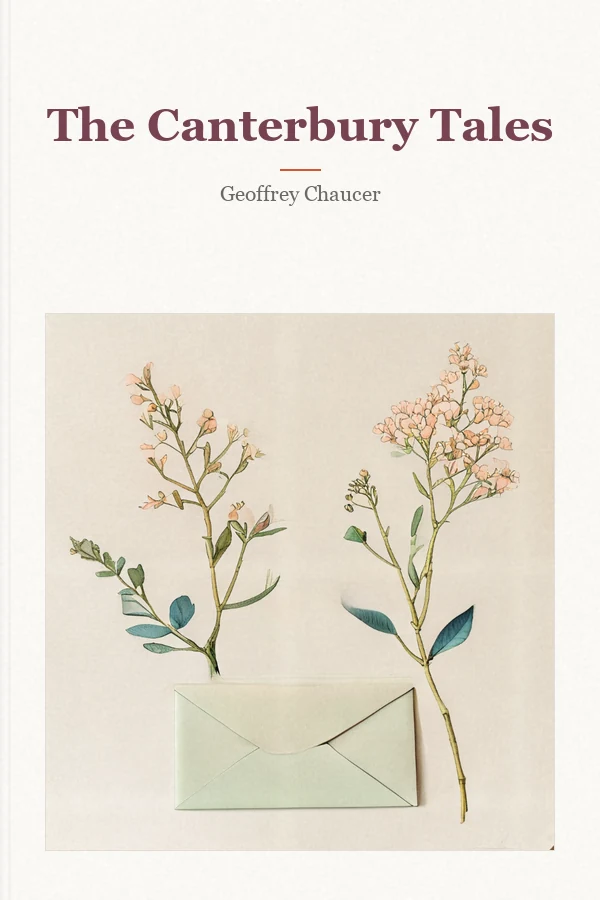
The Canterbury Tales cover The Canterbury Tales

The Canterbury Tales

Geoffrey Chaucer

CC0-1.0 EnglishPoetry187,764 words20h 11m listenUnabridged epic

<p><i>The Canterbury Tales</i> is a collection of twenty-four stories written in Middle English by <a href="https://standardebooks.org/ebooks/geoffrey-chaucer">Geoffrey Chaucer</a>. The tales are presented as a storytelling contest by a group of pilgrims on a journey from Southwark to the shrine of Saint Thomas Becket at Canterbury Cathedral. Each pilgrim tells a story to pass the time, and their tales range from bawdy and humorous to serious and moralistic.</p> <p>The stories provide valuable insights into medieval English society as they explore social class, religion, and morality. The pilgrims represent a cross-section of medieval English society: they include a knight, a prioress, a miller, a cook, a merchant, a monk, a nun, a pardoner, a friar, and a host, among others. Religion and morals play an important part of these stories, as the characters are often judged according to their actions and adherence to moral principles.</p> <p>Chaucer also contributed significantly to the development of the English language by introducing new vocabulary and expressions, and by helping to establish English as a literary language. Before the <i>Tales</i>, most literary works were written i
Chaucer, Geoffrey, -1400Christian pilgrims and pilgrimages--PoetryEnglish poetry--Middle English, 1100-1500

Chapter 1

“No more of this, for Goddë’s dignity!” Quoth ourë Hostë; “for thou makest me So weary of thy very lewëdness, 3928 That, all so wisly 3929 God my soulë bless, Mine earës achë for thy drafty 3930 speech. Now such a rhyme the devil I beteche: 3931 This may well be rhyme doggerel,” quoth he. “Why so?” quoth I; “why wilt thou lettë 3932 me More of my tale than any other man, Since that it is the best rhyme that I can?” “By God!” quoth he, “for, plainly at one word, Thy drafty rhyming is not worth a tord: Thou dost naught ellës but dispendest 3933 time. Sir, at one word, thou shalt no longer rhyme. Let see whe’er 3934 thou canst tellen aught in gest, 3935 Or tell in prosë somewhat, at the least, In which there be some mirth or some doctríne.” 3936 “Gladly,” quoth I, “by Goddë’s sweetë pine, 3937 I will you tell a little thing in prose, That oughtë likë you, 3938 as I suppose, Or else certés ye be too dangerous. 3939 It is a moral talë virtuous, All be it 3940 told sometimes in sundry wise By sundry folk, as I shall you devise. As thus, ye wot that ev’ry Evangelist, That telleth us the pain 3941 of Jesus Christ, He saith not all thing as his fellow doth; But natheless their sentence is all soth, 3942 And all accorden as in their senténce, 3943 All be there in their telling differénce; For some of them say more, and some say less, When they his piteous passión express; I mean of Mark and Matthew, Luke and John; But doubtëless their sentence is all one. Therefore, lordingës all, I you beseech, If that ye think I vary in my speech, As thus, though that I tellë some deal more Of proverbës, than ye have heard before Comprehended in this little treatise here, T’ enforcë with 3944 the effect of my mattére, And though I not the same wordës say As ye have heard, yet to you all I pray Blame me not; for as in my senténce Shall ye nowhere findë no differénce From the senténce of thilkë 3945 treatise lite, 3946 After the which this merry tale I write. And therefore hearken to what I shall say, And let me tellen all my tale, I pray.”

Edition & License

License
CC0-1.0
Source
Standard Ebooks
First published
1400
Author death year
1400
Catalog ID
se:geoffrey-chaucer_the-canterbury-tales

More in English

Browse all →