
DocuMeow
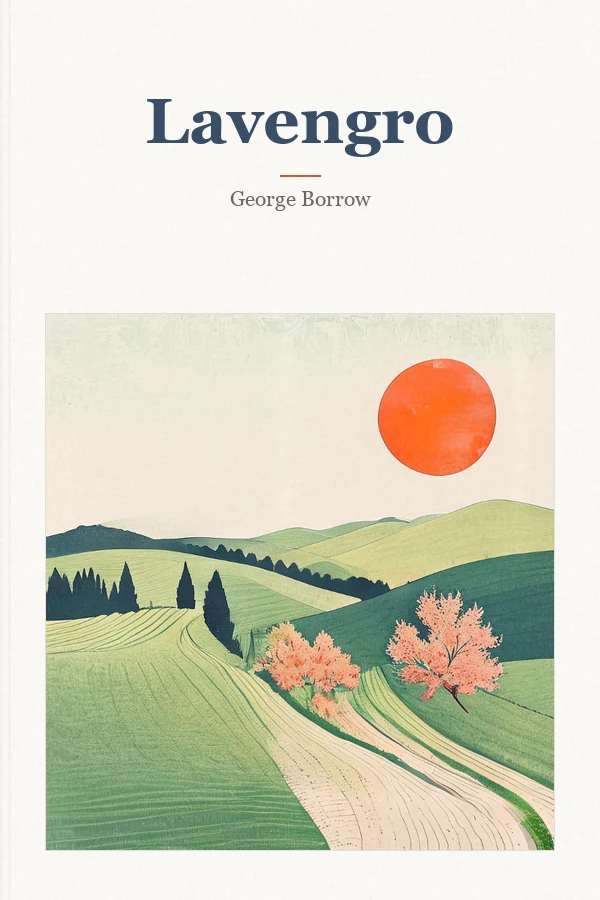
Lavengro cover Lavengro

Lavengro

George Borrow

CC0-1.0 EnglishClassics412,999 words44h 25m listenUnabridged epic

<p><i>Lavengro, the Scholar, the Gypsy, the Priest</i>, published in 1851, is a heavily fictionalized account of <a href="https://standardebooks.org/ebooks/george-borrow">George Borrow’s</a> early years. Borrow, born in 1803, was a writer and self-taught polyglot, fluent in many European languages, and a lover of literature.</p> <p><i>The Romany Rye</i>, published six years later in 1857, is sometimes described as the “sequel” to <i>Lavengro</i>, but in fact it begins with a straight continuation of the action of the first book, which breaks off rather suddenly. The two books therefore are best considered as a whole and read together, and this Standard Ebooks edition combines the two into one volume.</p> <p>In the novel Borrow tells of his upbringing as the son of an army recruiting officer, moving with the regiment to different locations in Britain, including Scotland and Ireland. It is in Ireland that he first encounters a strange new language which he is keen to learn, leading to a life-long passion for acquiring new tongues. A couple of years later in England, he comes across a camp of gypsies and meets the gypsy Jasper Petulengro, who becomes a life-long friend. Borrow is deli


England--FictionRomanies--Fiction

Chapter 1

Lavengro and The Romany Rye (properly Romanó Ráï ) were terms applied to George Borrow in his youth by the Norfolk Gypsy, Ambrose Smith, better known in these volumes as Jasper Petulengro. The names signify respectively “Philologist” and “the Gypsy Gentleman.” The two works thus entitled constitute a more or less exact autobiography of the writer of them, from the date of his birth to the end of August, 1825 . The author himself confesses in his Preface that “the time embraces nearly the first quarter of the present century.”

Lavengro was written at Oulton, in Suffolk, slowly and at intervals, between the years 1842 and 1851 . The MSS. exist in three varieties: 1. The primitive draft of a portion, found scattered through sundry notebooks and on isolated scraps of paper, as described in the letter to Dawson Turner ( Life , I , p. 394) 2. The definitive autograph text in one thick quarto volume. 3. The transcript for the printers, made by Mrs. Borrow, in one large folio volume, interlarded with the author’s additions and corrections.

The text of the present edition reproduces with fidelity the first issue of 1851 . Occasionally a verbal alteration, introduced by the author himself into his second edition of 1872 , has been adopted in this, whenever it seemed to improve the reading. In general, however, that reprint was in many respects a defective one. Not only words, but even whole sentences, which had escaped the printers, remained undetected by the editor, and, as a consequence, were lost to later impressions, based, as they all have been, on that issue. We should have preferred to alter, quietly and without remark, certain errors in the text, as we did in the documents published in the Life ; but save in a single instance, we have left such inaccuracies intact, reserving all corrections for the place where we might be supposed to exercise a free hand. 217

Edition & License

License
CC0-1.0
Source
Standard Ebooks
First published
1881
Author death year
1881
Catalog ID
se:george-borrow_lavengro

More in English

Browse all →

