DocuMeow
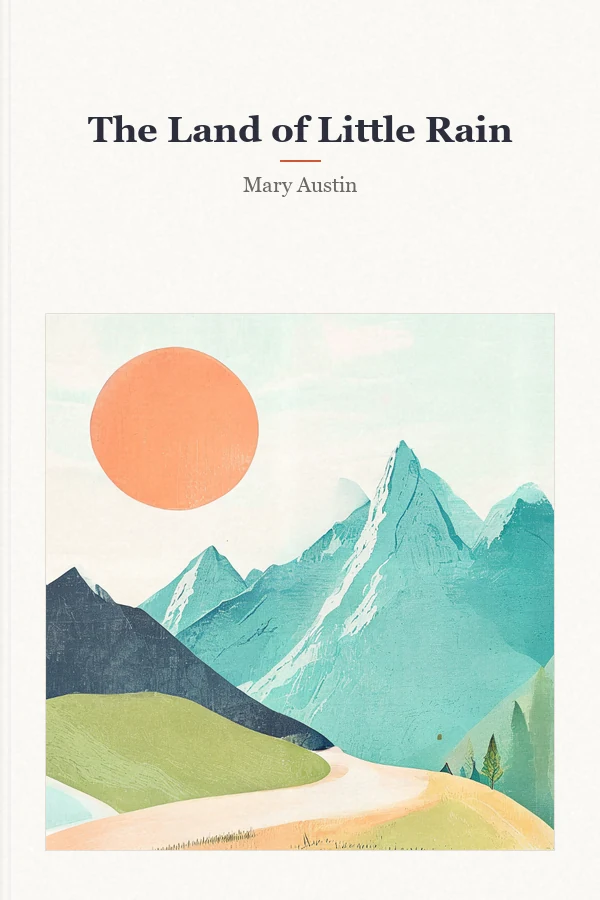
The Land of Little Rain cover The Land of Little Rain

The Land of Little Rain

Mary Austin

CC0-1.0 EnglishHistory36,682 words3h 57m listenMedium

<p><i>The Land of Little Rain</i> is a loosely connected collection of essays detailing the land and inhabitants of the American Southwest. The individual works are connected via the waterways that connect the regions they describe. The stories and essays focus on themes that contrast the supremacy of nature with the effects of humans in natural spaces. Many stories follow the animals in their daily lives, the growth of plants, the seasons, and the various human inhabitants of the region. The author creates a lyrical view of the desert and lowlands at the base of the mountains, with a focus on animal and plant life. Humans are generally viewed as interlopers in an otherwise pristine and functional system.</p> <p><a href="https://standardebooks.org/ebooks/mary-austin">Mary Austin</a> first published <i>The Land of Little Rain</i> in 1903. The work highlighted the life of the desert at a time when the popular imagination pictured the desert as empty and lifeless. At the time of writing there was much debate between those that wanted to anthropomorphize nature and present an idealistic view from animal perspectives, pejoratively referred to as “nature fakers,” and those that wanted to

California--Social life and customsNatural history--CaliforniaCalifornia--Description and travelFrontier and pioneer life--CaliforniaCalifornia--History, Local

Chapter 1

East away from the Sierras, south from Panamint and Amargosa, east and south many an uncounted mile, is the Country of Lost Borders.

Ute, Paiute, Mojave, and Shoshone inhabit its frontiers, and as far into the heart of it as a man dare go. Not the law, but the land sets the limit. Desert is the name it wears upon the maps, but the Indian’s is the better word. Desert is a loose term to indicate land that supports no man; whether the land can be bitted and broken to that purpose is not proven. Void of life it never is, however dry the air and villainous the soil.

This is the nature of that country. There are hills, rounded, blunt, burned, squeezed up out of chaos, chrome and vermilion painted, aspiring to the snowline. Between the hills lie high level-looking plains full of intolerable sun glare, or narrow valleys drowned in a blue haze. The hill surface is streaked with ash drift and black, unweathered lava flows. After rains water accumulates in the hollows of small closed valleys, and, evaporating, leaves hard dry levels of pure desertness that get the local name of dry lakes. Where the mountains are steep and the rains heavy, the pool is never quite dry, but dark and bitter, rimmed about with the efflorescence of alkaline deposits. A thin crust of it lies along the marsh over the vegetating area, which has neither beauty nor freshness. In the broad wastes open to the wind the sand drifts in hummocks about the stubby shrubs, and between them the soil shows saline traces. The sculpture of the hills here is more wind than water work, though the quick storms do sometimes scar them past many a year’s redeeming. In all the Western desert edges there are essays in miniature at the famed, terrible Grand Canyon, to which, if you keep on long enough in this country, you will come at last.

Edition & License

License
CC0-1.0
Source
Standard Ebooks
First published
1930
Author death year
1934
Catalog ID
se:mary-austin_the-land-of-little-rain

More in English

Browse all →