
DocuMeow
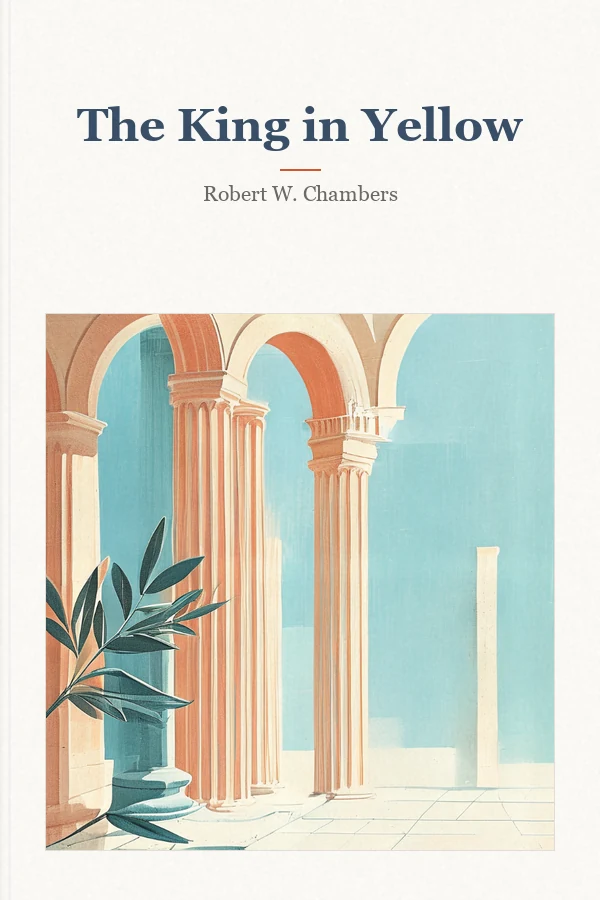
The King in Yellow cover The King in Yellow

The King in Yellow

Robert W. Chambers

CC0-1.0 EnglishClassics73,770 words7h 56m listenLong

<p><i>The King in Yellow</i> is a fascinating, almost two-faced work. The first half consists of five legendary weird tales, loosely tied together by a fictional play—the eponymous <i>King in Yellow</i>—that drives those who read it mad. Celebrated by authors like <a href="https://standardebooks.org/ebooks/h-p-lovecraft">H. P. Lovecraft</a> and Lin Carter, these stories are classic tales of madness, despair, and strange happenings.</p> <p>With the fifth tale the reader finds a sort of palate-cleansing collection of short prose-poems leading into the last four stories, which take a sharp turn away from the weird and into the romantic. The concluding tales are set in the Parisian art world.</p> <p>In modern times <i>The King in Yellow</i> enjoys a reputation largely due to the strength of its first half of macabre tales, but by no means does that make the second half less enjoyable. Both halves are written in a quick, light prose style that demonstrates why <a href="https://standardebooks.org/ebooks/robert-w-chambers">Chambers</a> was a best-seller in his day.</p>


Short stories, AmericanHorror tales, AmericanUnited States--Social life and customs--19th century--Fiction

Chapter 1

“Oh, thou who burn’st in heart for those who burn In Hell, whose fires thyself shall feed in turn; How long be crying⁠—‘Mercy on them.’ God! Why, who art thou to teach and He to learn?”

In the Church of St. Barnabé vespers were over; the clergy left the altar; the little choirboys flocked across the chancel and settled in the stalls. A Suisse in rich uniform marched down the south aisle, sounding his staff at every fourth step on the stone pavement; behind him came that eloquent preacher and good man, Monseigneur C⁠⸺.

My chair was near the chancel rail, I now turned toward the west end of the church. The other people between the altar and the pulpit turned too. There was a little scraping and rustling while the congregation seated itself again; the preacher mounted the pulpit stairs, and the organ voluntary ceased.

I had always found the organ-playing at St. Barnabé highly interesting. Learned and scientific it was, too much so for my small knowledge, but expressing a vivid if cold intelligence. Moreover, it possessed the French quality of taste: taste reigned supreme, self-controlled, dignified and reticent.

Today, however, from the first chord I had felt a change for the worse, a sinister change. During vespers it had been chiefly the chancel organ which supported the beautiful choir, but now and again, quite wantonly as it seemed, from the west gallery where the great organ stands, a heavy hand had struck across the church at the serene peace of those clear voices. It was something more than harsh and dissonant, and it betrayed no lack of skill. As it recurred again and again, it set me thinking of what my architect’s books say about the custom in early times to consecrate the choir as soon as it was built, and that the nave, being finished sometimes half a century later, often did not get any blessing at all: I wondered idly if that had been the case at St. Barnabé, and whether something not usually supposed to be at home in a Christian church might have entered undetected and taken possession of the west gallery. I had read of such things happening, too, but not in works on architecture.

Edition & License

License
CC0-1.0
Source
Standard Ebooks
First published
1930
Author death year
1933
Catalog ID
se:robert-w-chambers_the-king-in-yellow

More in English

Browse all →

