DocuMeow
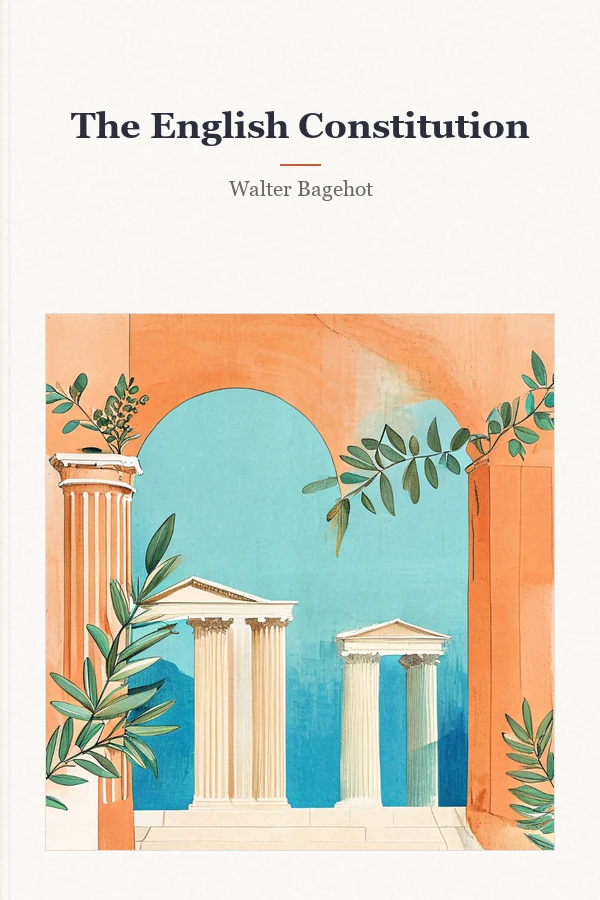
The English Constitution cover The English Constitution

The English Constitution

Walter Bagehot

CC0-1.0 EnglishHistory99,113 words10h 39m listenLong

<p>The challenge facing <a href="https://standardebooks.org/ebooks/walter-bagehot">Walter Bagehot</a> while writing the essays that became his study of <i>The English Constitution</i> is that, infamously, there is no “English constitution,” at least, not one that has ever been written down. The government of Great Britain and Ireland, in Bagehot’s day, is the result of centuries of evolution, and so is the product of custom, precedent, reform, and a great degree of chance.</p> <p>As a “constitutional monarchy,” the theory of government that Bagehot describes entails chiefly the role of the monarch, the main legislative assembly—the House of Commons—and its counterpart in the “upper house,” the House of Lords which, despite its apparently higher social register, is in reality a subordinate assembly. In these arrangements, the Reform Acts of 1832 and 1867 (the latter being debated while Bagehot was writing his essays) played a major role, and loom large in Bagehot’s discussion of the institutions of his day. The second edition of his work, published in 1872, takes a considered view of effects of the second phase of reform.</p> <p>At the time of writing, Bagehot was well settled into

Constitutional history--Great BritainGreat Britain--Politics and government

Chapter 1

“On all great subjects,” says Mr. Mill, “much remains to be said,” and of none is this more true than of the English Constitution. The literature which has accumulated upon it is huge. But an observer who looks at the living reality will wonder at the contrast to the paper description. He will see in the life much which is not in the books; and he will not find in the rough practice many refinements of the literary theory.

It was natural⁠—perhaps inevitable⁠—that such an undergrowth of irrelevant ideas should gather round the British Constitution. Language is the tradition of nations; each generation describes what it sees, but it uses words transmitted from the past. When a great entity like the British Constitution has continued in connected outward sameness, but hidden inner change, for many ages, every generation inherits a series of inapt words⁠—of maxims once true, but of which the truth is ceasing or has ceased. As a man’s family go on muttering in his maturity incorrect phrases derived from a just observation of his early youth, so, in the full activity of an historical constitution, its subjects repeat phrases true in the time of their fathers, and inculcated by those fathers, but now true no longer. Or, if I may say so, an ancient and ever-altering constitution is like an old man who still wears with attached fondness clothes in the fashion of his youth: what you see of him is the same; what you do not see is wholly altered.

Edition & License

License
CC0-1.0
Source
Standard Ebooks
First published
1877
Author death year
1877
Catalog ID
se:walter-bagehot_the-english-constitution

More in English

Browse all →