DocuMeow
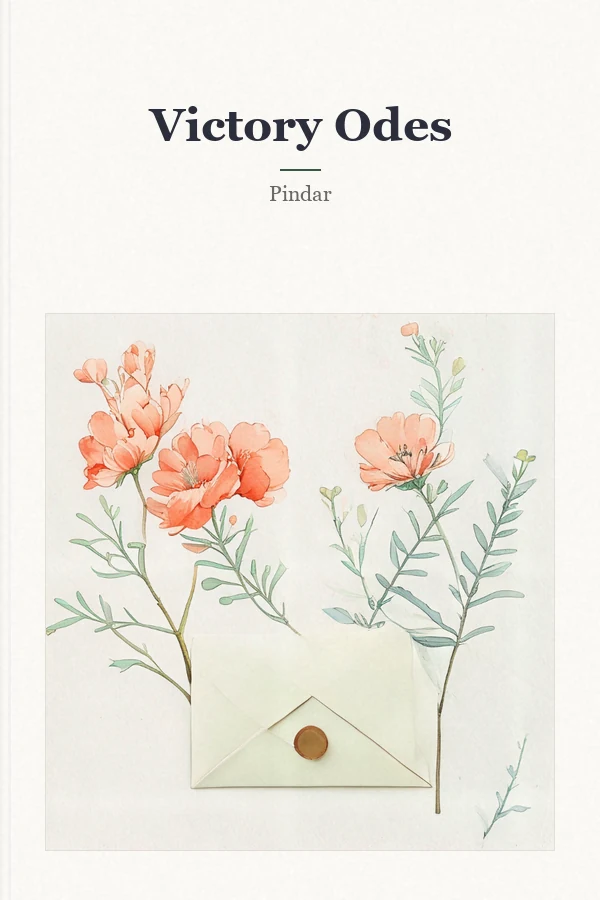
Victory Odes cover Victory Odes

Victory Odes

Pindar

CC0-1.0 EnglishPoetry45,847 words4h 56m listenMedium

<p>The victory odes, or <i>epinikia</i>, are a series of poems composed by the ancient Greek poet <a href="https://standardebooks.org/ebooks/pindar">Pindar</a> to commemorate the triumphs of athletes who competed in various Panhellenic games like the Olympic, Pythian, Nemean, and Isthmian Games. The poems are known for their intricate complexity, which combines praise for the athletes, mythological references, moral reflections, and philosophical musings.</p> <p>The victory odes are considered to be the most complete works by Pindar that have survived from antiquity, as the rest of his works only exist in papyrus fragments. These odes provide valuable insights into the ancient Greek world, as they reveal how the Greeks celebrated their athletic heroes, and the cultural significance of athletic competition in ancient Greece.</p>
Pindar--Translations into EnglishLaudatory poetry, Greek--Translations into EnglishOlympic games (Ancient)--PoetryAthletics--Greece--PoetryMythology, Greek--PoetryGames--Greece--Poetry

Chapter 1

Cf. the speech of Brasidas to his soldiers: “You are not to be cowed by any numerical superiority of your foes, since you do not come from states in which such a lesson is learnt. You come from those in which the masses do not lord it over the select few, but where the minority rule the majority⁠—a supremacy which they acquired by nothing save fighting superiority.” —⁠ Thucydides , IV , 126 ↩

Perhaps based on the Pythagorean doctrine of Transmigration. The good after death enjoy, for a limited season, restful happiness in the underworld; then they pass through two reincarnations; and when they have passed unstained through their three periods of earthly probation, they are admitted to a life of endless felicity in the Islands of the Blest. ↩

Explained by scholiasts as a reference to Pindar’s rivals, the Cean poets, Simonides and his nephew Bacchylides. ↩

Erginus, one of the Argonauts. The occasion was the funeral games for Thoas, queen Hypsipyle’s father. ↩

Iamus , from ia , the pansies ( Viola tricolor ) among which he lay. ↩

Edition & License

License
CC0-1.0
Source
Standard Ebooks
First published
1930
Author death year
1930
Catalog ID
se:pindar_victory-odes_arthur-s-way

More in English

Browse all →